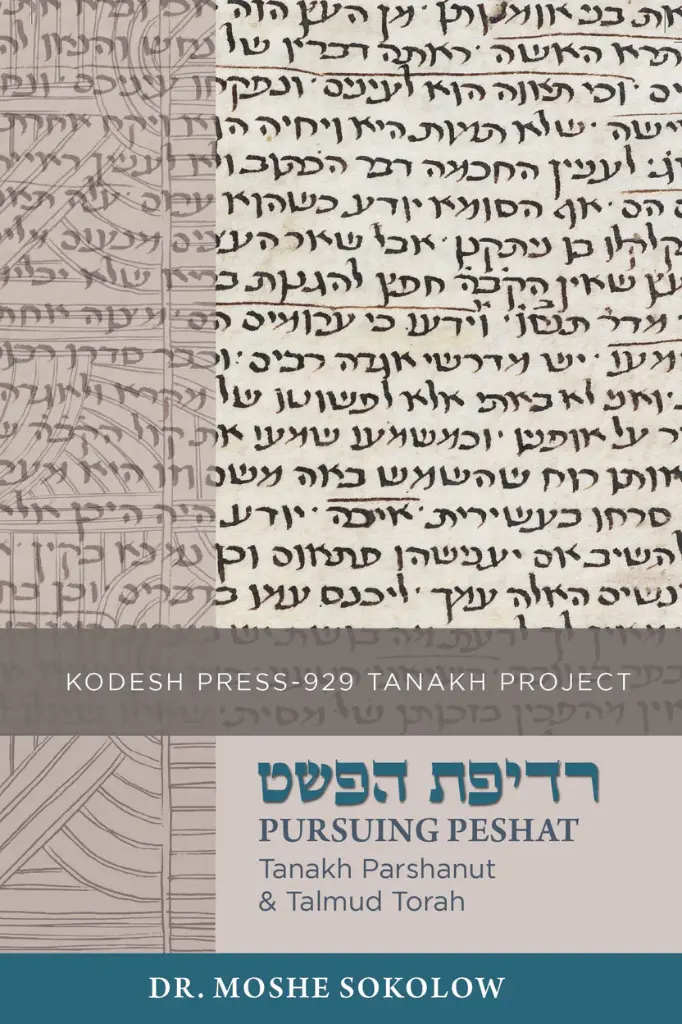
Peshat literally means the simple, or literal, interpretation of the text. However, the definition and determination of peshat is anything but straightforward. The Sages of the Talmud and Midrash debated how to ascertain peshat. This debate continued among the Rishonim and Acharonim: how much weight should be given to peshat as opposed to allegorical and halakhic interpretations, what assumptions inform us in arriving at peshat, and how do we differentiate peshat from derash? These debates rage into the modern day, as leading rabbis, educators, and scholars seek to understand the place of peshat in the nexus of biblical interpretation.
Pursuing Peshat masterfully draws on a wide variety of rabbinic writings like Mishnah, Midrash Rabbah, Midrash Tanchuma, Yalkut Shimoni, Talmud Bavli, and Talmud Yerushalmi; he also discusses Saadia Gaon, Sherira Gaon, and other Geonim from the sixth to tenth centuries. He also analyzes the methodology of Rashi, Radak, Rashbam, Ibn Ezra, Ramban, Bechor Shor, Ibn Caspi, Gersonides (Ralbag), Abarbanel, and other Rishonim. Special attention is given to Maimonides (Rambam), and the interplay of Mishneh Torah and Moreh Nevuchim (Guide for the Perplexed). There is also a fascinating discussion of Achronim and Early Modern Jewish authorities, like Malbim, Netziv, Moses Mendelssohn, Samuel David Luzzatto (Shadal), Torah Temimah, Nehama Leibowitz, Franz Rosenzweig, and Martin Buber.
There are also sections on ancient Near Eastern sources like the Akkadian language and the Enuma Elish creation epic, and whether surrounding cultures can shed light on questions of peshat. Additionally provided are discussions on Biblical synonyms, hapax legomena, and Scriptural ambiguity.
Dr. Sokolow analyzes the questions of parshanut and authority/tradition vs. reason, using specific Biblical passages like the stories of Nimrod, the Tower of Babel, the Binding of Isaac, the Ten Commandments, the phrase “eye for an eye,” and Sennacherib.